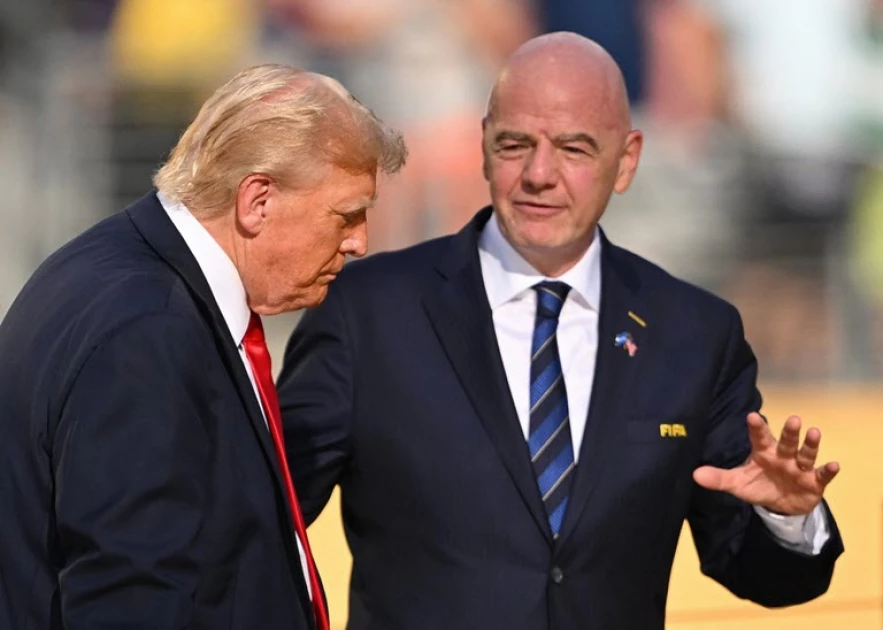
Donald Trump is once again using the global appeal of football — or soccer, depending on the moment — to pursue diplomatic influence. On Friday, he will meet the leaders of Canada and Mexico in Washington during the draw for the 2026 World Cup, which the three countries are co-hosting.
The event was meant to highlight North American cooperation, but strained relations are likely to dominate behind-the-scenes discussions. Since returning to office, Trump has clashed with both countries on trade, migration, and anti-drug efforts, complicating what should have been a symbolic moment of unity.
For Mexico’s President Claudia Sheinbaum, this will be her first meeting with Trump. She says trade issues will top their short conversation before the draw. Canada’s Prime Minister Mark Carney will also meet Trump briefly, following months of tension that included stalled trade talks and Trump’s earlier suggestion that Canada could become the 51st U.S. state.
Trump has imposed new tariffs on Canadian and Mexican exports outside the USMCA agreement and warned of more penalties unless both countries curb migration and drug trafficking. His remark that he would be “OK” with airstrikes in Mexico angered Sheinbaum, while Canada was rattled by his statehood comments.
Despite the friction, the three nations are hosting the biggest sporting event on the planet — a bid they launched together in 2017. Trump has embraced the World Cup as a tool for geopolitical messaging, often alongside FIFA president Gianni Infantino, with whom he shares a warm relationship. Infantino is expected to award Trump a new FIFA “peace prize” during the event.
Trump’s World Cup diplomacy, however, has collided with his hardline immigration agenda. He recently introduced a fast-track visa option for World Cup ticket holders but stressed that it does not guarantee U.S. entry. He also paused asylum decisions for 19 countries — including Haiti and Iran — after an Afghan national allegedly shot two National Guard members.
Additionally, Trump has unsettled FIFA officials by suggesting he could relocate matches away from Democratic-led cities where he is conducting anti-crime and immigration operations.
The leaders may stand together for the ceremonial draw, but beneath the photo-op lies a diplomatic balancing act shaped by politics, pressure, and the global pull of the World Cup.